
Rock gardens are one of the easiest ways to add texture, color, and year-round interest to your landscape. The secret to a beautiful rock garden is choosing tough, low-maintenance plants that thrive in rocky, well-draining soil while softening the hard edges of stone. Whether you’re filling a sunny slope, creating a hillside garden, or building a small rockery, these hardy perennials will return year after year with very little fuss.
From colorful ground covers to fragrant herbs and evergreen shrubs, these hardy plants are perfect for creating a landscape that’s both beautiful and easy to care for.
What Plants are Good for Rock Gardens?
First, let’s talk about what makes a perennial plant a good fit for a rock garden. Think about the characteristics of a rock garden and your own landscape and environment specifically, too. most rock gardens will have good drainage because they’re, well, rocky. Drought-tolerant perennial plants are great fits here, and will allow you to use less water (because who wants to water rocks?). Many homeowners often opt to use rocks for landscaping steep slopes. If that’s the case for you, some ground cover plants are probably important to help reduce erosion.
Beyond these details, think about native plants from rocky regions – what do you picture? Alpine plants from rocky mountain landscape, sedum varieties from desert regions, or dwarf evergreens are commonly seen amongst rocky landscapes and will be a natural fit in a well-designed rock garden. If you incorporate a variety of large and small plants of different textures, some that flower, some for evergreen foliage, you’ll be off to a great start! With this in mind, take a look at some of the best plants for rock gardens we’ve gathered below!
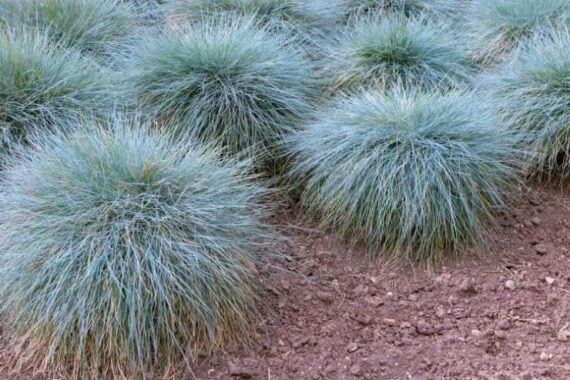
Blue Fescue
Blue Fescue is an ornamental grass that stands out for its compact mounds of silvery-blue foliage, adding cool-toned color long after many flowers have faded. It thrives in full sun and well-drained soil, is drought tolerant once established, and is rarely bothered by deer. Its tidy shape makes it perfect for edging pathways, filling gaps between large rocks, or contrasting with flowering perennials.
Photo via Real Simple
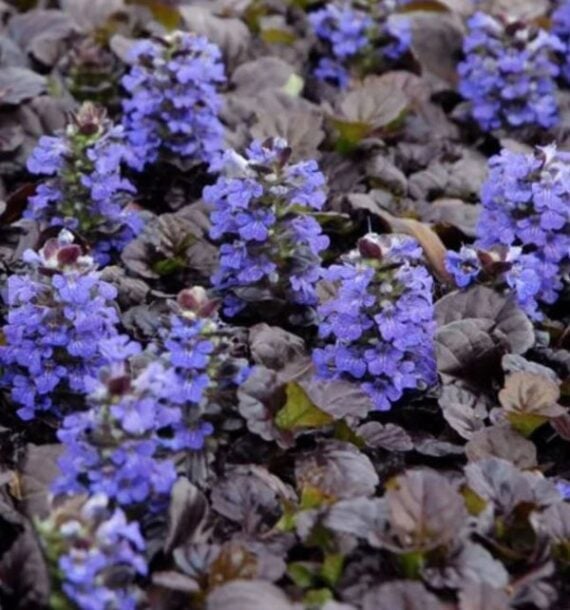
Bugleweed
Bugleweed is a fast-spreading ground cover with glossy foliage and spikes of blue flowers that bloom in spring. It quickly fills bare spaces between rocks, helping suppress weeds while softening the look of stone pathways and retaining walls. Unlike many rock garden plants, it also tolerates part shade, making it a versatile option for tricky shaded areas.
Photo via Garden Design
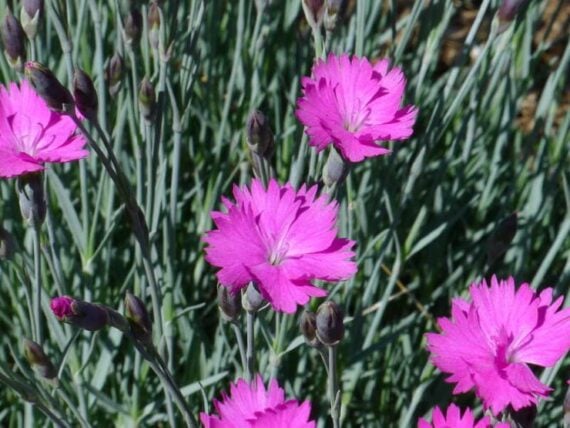
Cheddar Pink
Cheddar Pink produces fragrant pink flowers above neat mounds of blue-green foliage each spring. Its evergreen leaves provide year-round interest, while the blooms attract butterflies and other pollinators. Because it’s also deer resistant and thrives in poor, rocky soil, it’s an easy choice for sunny borders and rock gardens.
Photo via Lawn Love
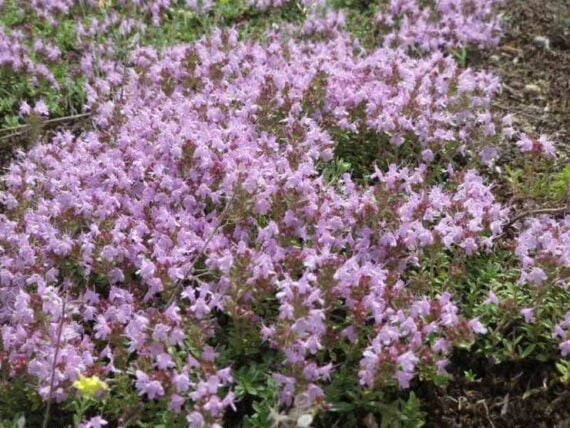
Creeping Thyme
Creeping Thyme creates a dense carpet of fragrant foliage that’s perfect for growing between stepping stones and rocks. It tolerates light foot traffic and releases a pleasant herbal scent when brushed or stepped on. In summer, it’s covered with tiny purple flowers that attract bees and other beneficial pollinators. There are many varieties of thyme, some with white flowers and some with purple, all of which we’d consider great options, but creeping thyme will help the most with filling in gaps between rocks.
Photo via Lawn Love
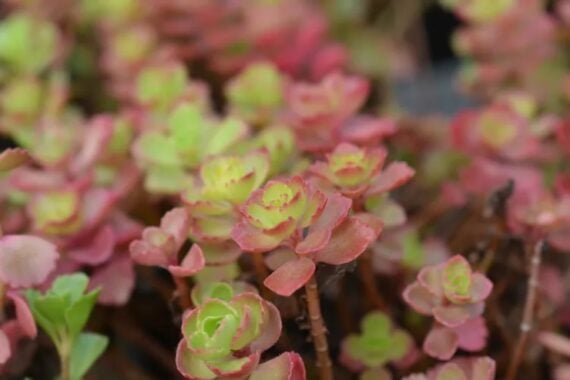
Dragon’s Blood Stonecrop
Dragon’s Blood Stonecrop is a hardy succulent with colorful foliage that changes from green to deep burgundy as the seasons progress. It stores water in its succulent leaves, making it exceptionally drought tolerant and well suited for hot, sunny rock gardens. Its spreading habit also makes it an excellent low-maintenance ground cover.
Photo via The Spruce
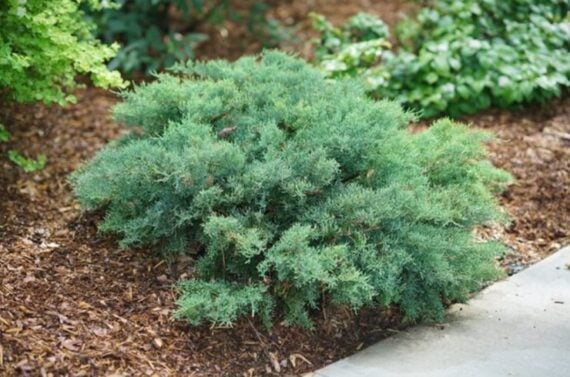
Juniper
A beautiful evergreen plant is an essential addition to any rock garden. Low-growing Juniper adds evergreen texture and structure that looks beautiful cascading over rocks and slopes. Its extensive root system makes it especially useful for stabilizing hillsides and preventing erosion. Once established, it requires very little maintenance while providing year-round color and shelter for birds.
Photo via Garden Design
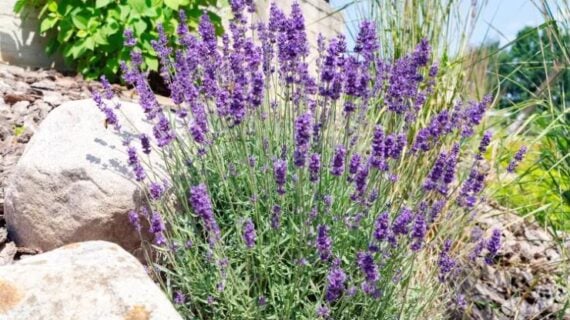
Lavender
Lavender brings fragrant purple flower spikes and silvery foliage to sunny rock gardens. It flourishes in dry, well-drained soil and is naturally resistant to both deer and rabbits. The long-lasting blooms are a favorite of bees and butterflies, and the flowers can even be harvested for dried arrangements or sachets.
Photo via Real Simple
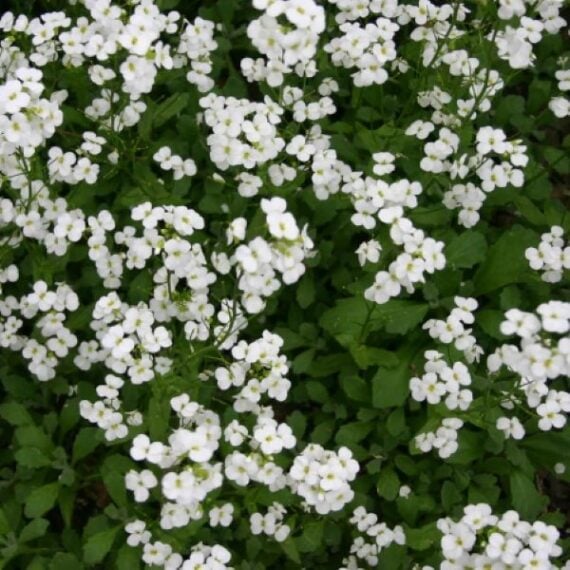
Rock Cress
Rock Cress is loved for its abundance of colorful early spring flowers that spill gracefully over retaining walls and boulders. As one of the earliest bloomers of the season, it provides an early source of nectar for pollinators. Because it stays low and spreads outward, it’s ideal for filling spaces between larger rocks without overwhelming nearby plants.
Photo via Planet Desert
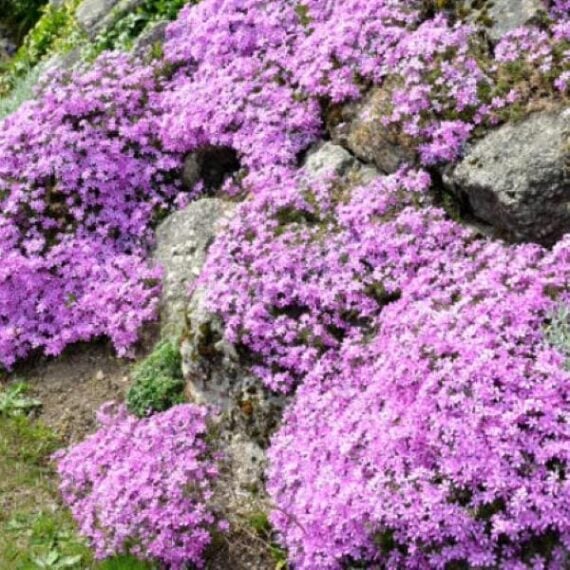
Rock Soapwort
Rock Soapwort forms a low-growing mat of green foliage that becomes covered with delicate pink flowers in late spring. It spreads easily into cracks and crevices, making it ideal for filling empty spaces in rock gardens. It thrives in poor, rocky soil and requires very little maintenance, making it an excellent choice for beginner gardeners.
Photo via Planet Desert
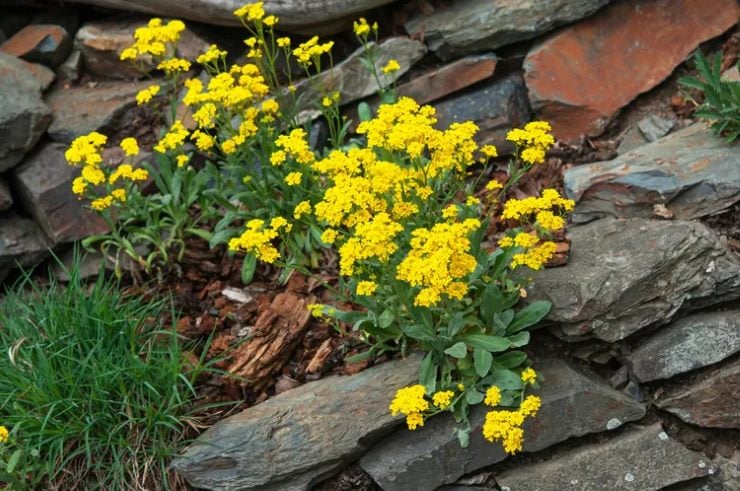
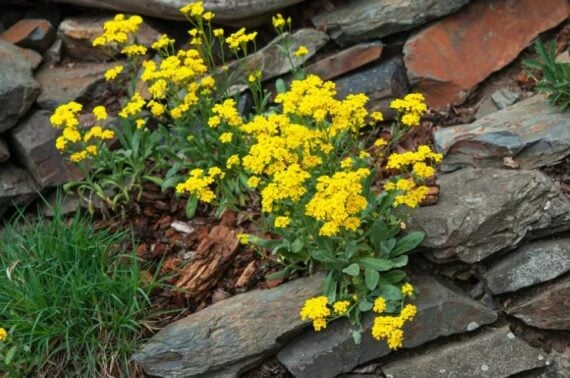
Yellow Alyssum
Yellow Alyssum brightens the garden with masses of cheerful golden blooms each spring. Its compact growth habit and excellent drought tolerance make it a dependable choice for sunny rock gardens and alpine garden plantings. The vibrant flowers also attract butterflies and other pollinators, making it a great addition to wildlife-friendly gardens.
Photo via The Spruce
Build a Rock Garden You’ll Enjoy for Years
As you can see, there is a wide range of plants each with their own special attributes to contribute to your rockery garden. From flowers in a variety of colors, to wispy grasses, to colorful succulents, it can be tough to choose your focal points amongst these excellent choices. The best rock gardens combine a variety of textures, colors, and bloom times to create a landscape that’s beautiful in every season. By mixing evergreen plants, flowering perennials, and low-growing ground covers, you can enjoy a garden that’s both colorful and easy to maintain for years to come.
Looking for even more inspiration? Explore our favorite drought-tolerant perennials for low-water landscapes, or browse our guide to the best ground cover plants to fill bare spaces, soften hard edges, and add even more color to your garden. Loving rock garden inspiration? Check out some rock art ideas to add to your own garden, or discover ways to landscaped a slope with rocks.